Listen to this essay · 6 min
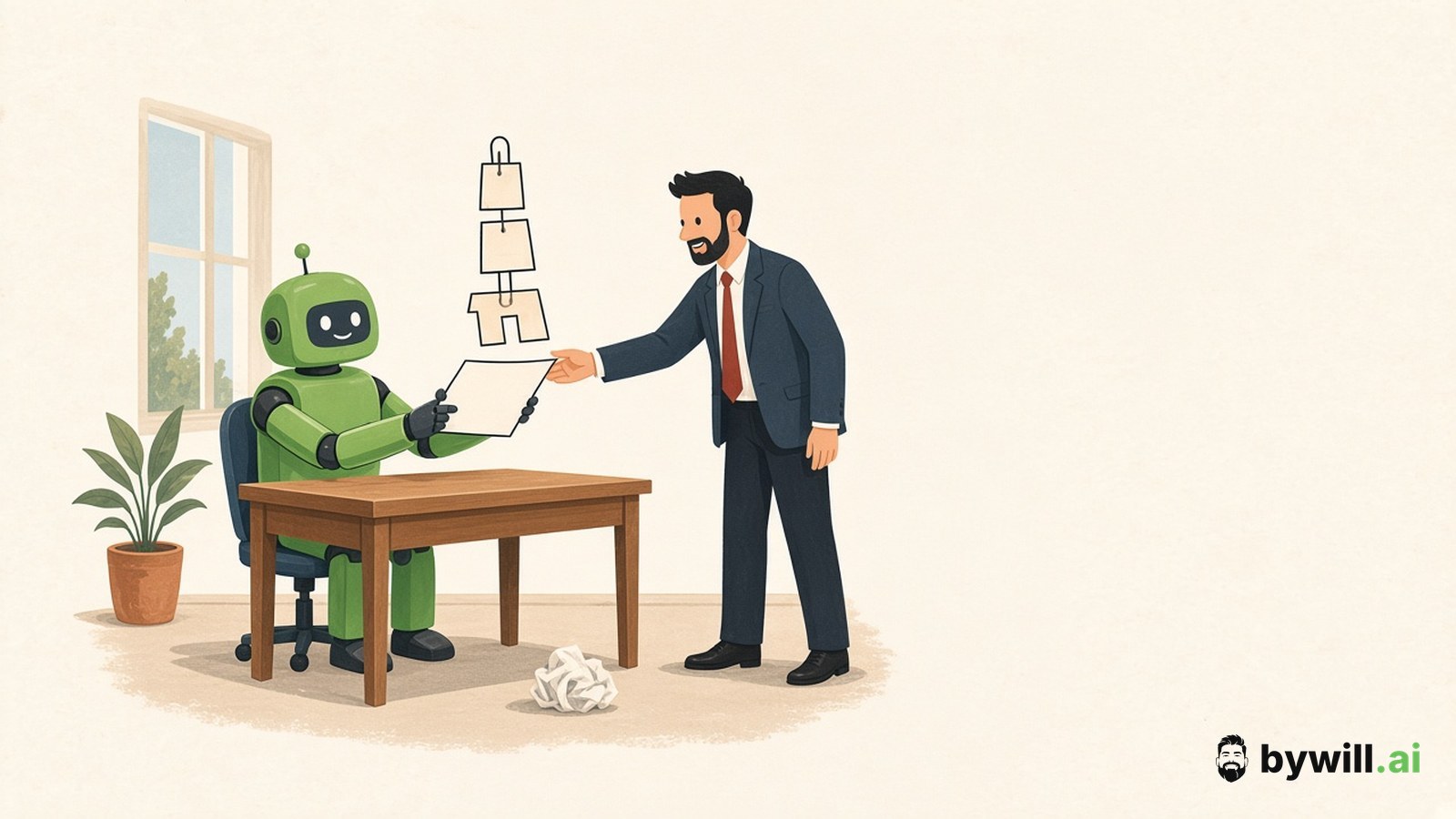
I once had a student whose AI kept "hallucinating". Every request she gave it came back wrong, and she was ready to give up on the whole thing. But when we sat down together, I found the problem wasn't the machine. Her own thinking wasn't clear yet, so the prompt couldn't be either. The AI was guessing because she was still guessing too.
That's the lesson I see in almost every workshop I run. Prompting isn't a trick or a list of magic words. It's the everyday skill of asking clearly for what you want, and it starts before you type. Anthropic, the company behind Claude, puts it well in its own guide: think of the model as "a brilliant but new employee who lacks context on your norms and workflows." Here's what goes wrong, and the simple method I teach instead.
01When your thinking is foggy, brainstorm first
If you aren't sure what you want, no prompt will fix that. So don't start with a prompt. Start with a brain dump. Write down everything, messy and unfinished, and then say so: "I'm not really sure what I want to do. Let's brainstorm this together, and give me some references."
That's what helped my student. Once she'd talked it through, her requests got clearer, and the "hallucinations" mostly went away.
Insight: clear asking starts with clear thinking, and the AI can help you get there if you're honest that you're not there yet.
02The mistakes I see most
Five habits come up again and again in my workshops.
- Too little context. People get frustrated because the AI doesn't know what's on their mind. It can't. If a new colleague would need a detail to do the job well, the model needs it too.
- Too much at once. People try to cram a whole project into one request. Ask for one clear thing at a time.
- Never fixing the prompt. When the answer misses, they shrug and move on, instead of going back and improving the request.
- Never asking the AI to improve it. Hardly anyone asks: "If you were able to make this prompt better, what would you do?"
- Too many gimmicks. People get formulaic: "it has to be like this, it has to be like that." At the end of the day, what works is a plain English conversation with confirmation and feedback.
The basics still matter. Say what you want done, describe your situation, and describe what the finished result should look like. If you have an example you like, paste it in and say "like this." But you don't need a secret formula for any of it.
Insight: most bad answers come from a rushed ask, not a weak model.
The AI was guessing because she was still guessing too.
03Hire a prompt writer
My favourite tip is simple. Set up one AI whose only job is writing prompts. Give it lots of context, then tell it: "Your job is to produce prompts. I'll give you my ideas and what I'm trying to do. You give me the prompts, and ask me some questions to make sure we get to what I'm looking for."
You can mix tools too. ChatGPT could write the prompts, and you test them in Claude Code. If one works, go back to ChatGPT and say so: "Yes, that's the prompt. Keep going like that."
Insight: praise works on machines as well as people. Tell your prompt writer when it gets it right, and ask it to remember.
04My six-step method
Put together, here's the method I teach:
- Start with a plain English conversation. Explain what you're trying to do, in your own words.
- Ask it to ask you questions. Let it check it has understood before it writes anything.
- Have a separate agent write the prompt. One AI drafts the prompt. Another does the work.
- Test the prompt. Run it and look honestly at what comes back.
- Close the loop. If it worked, go back to the prompt writer and say "you did a good job, that was exactly what I needed." If it didn't, go back and say "that didn't work, let's adjust it," and keep going until you get what you want.
- Save it and build a library. Ask the AI to save the winning prompt in its memory, and keep your own copy too, as a simple MD file or on GitHub. Over time, you build a repository of what works.
Insight: every prompt you fix and save makes the next one easier. Small wins start a ripple.
In short
Prompting isn't a hack, and it won't stay a specialist job. It's the grammar of a new kind of conversation: think clearly, ask plainly, let the AI ask you back, test, give feedback, and keep what works. The people who get the most from AI won't be the ones who memorise clever phrases. They'll be the ones who learn to brief well, and that's a skill any of us can teach, practise and improve.
Don't hand it half a thought
and hope it reads your mind;
first get your thinking straight,
then say what you've in mind.
Let it ask you questions,
then test, and praise, and save;
a library of good asks
is the best help you can have.
"The more precisely you explain what you want, the better the result." — Anthropic, prompting guide for Claude
It was written about one AI model, but it's true of every one of them, and of most colleagues too. Before an AI can understand what you want, you have to understand it yourself.
If you want this practised with your team, have a look at AI training for teams.
So, what will your next prompt say: a wish, or a brief? What are your insights?
— Will
Written by Will, with Bloggy, his AI editor